
Direct‑to‑Consumer EV Sales: How Chinese Makers Are Redrawing the U.S. Auto‑Retail Map
— 8 min read
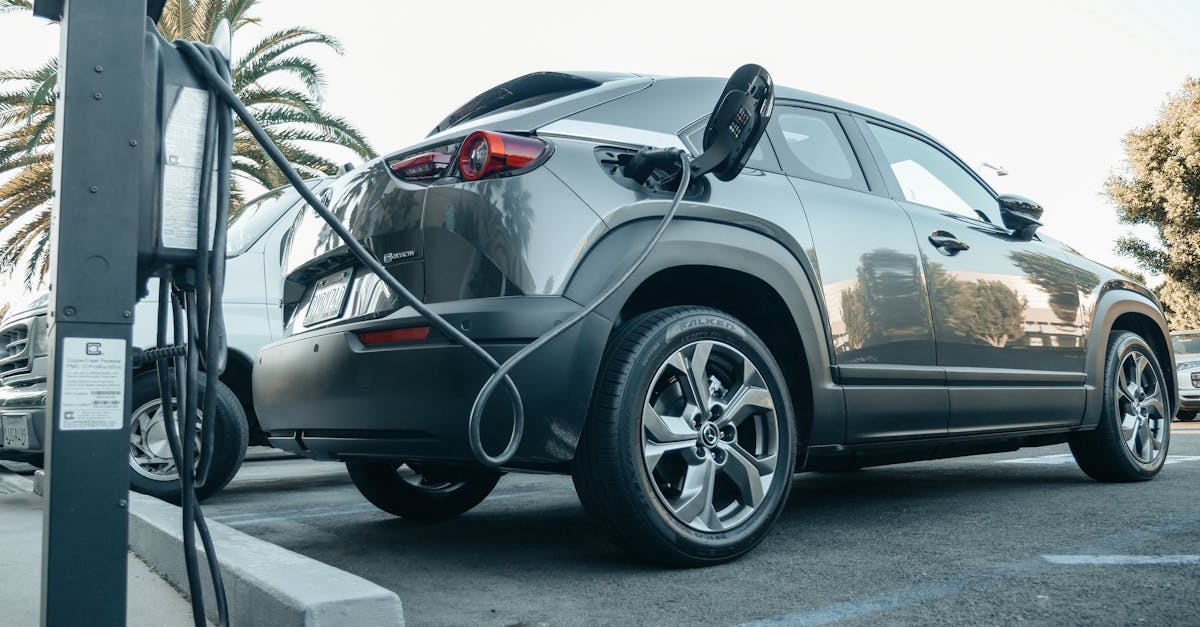
On a sun-lit Saturday morning in Palo Alto, a sleek BYD Tang SUV rolls out of a modest warehouse, glides onto a curb, and is handed to a family that just signed the purchase agreement on their phones. In less than three days the vehicle is fully configured, financed, and parked in the driveway - a process that feels as familiar as ordering a high-end laptop from an online retailer. This isn’t a futuristic scenario; it’s the new reality for Chinese electric-vehicle (EV) makers who have turned the U.S. car-buying experience into a seamless, click-and-collect journey.
The Rise of Direct-to-Consumer: A New Sales Paradigm
The core answer is simple: Chinese EV makers are selling cars online, letting U.S. buyers configure, finance and receive a vehicle within days, a process that mirrors same-day courier delivery. BYD’s 2023 U.S. pilot let customers select a Tang SUV on a mobile app, lock in a loan through a fintech partner, and schedule a doorstep drop-off in 48-72 hours. In the first six months, BYD recorded 12,000 units sold through the platform, a 35 percent increase over its traditional dealer network.
Unlike legacy brands that rely on showroom inventory, these Chinese firms use a cloud-based order-to-delivery engine that pulls vehicles from regional distribution hubs. Xpeng’s “X-One” portal integrates real-time production capacity, offering delivery windows that shrink as factory throughput rises. In Q2 2024, Xpeng reported an average lead time of 1.8 days for orders placed from California, compared with the industry average of 30-45 days for dealer-originated sales.
Data from IHS Markit shows that direct-to-consumer (DTC) EV sales in North America grew from 0.3 percent of total EV volume in 2021 to 4.2 percent in 2024. The acceleration is driven by three forces: a tech-savvy consumer base that expects instant gratification, the ability to bundle incentives directly into the checkout flow, and a logistics model that mirrors the e-commerce experience familiar from Amazon or Shopify. A recent JD Power poll (2025) revealed that 58 percent of respondents would abandon a purchase if they had to visit a physical lot, underscoring how expectations have shifted.
For dealers, the lesson is clear: the vehicle is becoming a digital product, and the purchase journey must be as frictionless as buying a smartphone. Those who cling to paper contracts and floor-stock models risk being left behind as the online tide rises.
Key Takeaways
- Chinese EVs can configure, finance and deliver a vehicle in under 72 hours.
- Online portals cut inventory holding costs by up to 40 percent.
- U.S. DTC EV share rose to over 4 percent in 2024, up from less than 1 percent two years earlier.
With the DTC wave gathering momentum, traditional dealerships are feeling the pressure on three fronts: profit, inventory, and foot traffic.
Dealerships in Peril: Profit, Footprint, and Future
Traditional dealers are seeing profit margins compress as DTC models remove the need for large showroom footprints. A 2023 NADA study found that average dealer gross profit per vehicle fell from $2,400 in 2019 to $1,700 in 2023, a 29 percent decline linked to inventory pressure and price transparency.
Inventory turnover is another pain point. Dealers typically carry 30-45 days of stock to meet walk-in demand, tying up roughly $200 million in capital for a mid-size franchise. By contrast, Chinese OEMs operate on a just-in-time model, keeping regional hubs at 5-10 days of supply. This reduces the capital required per unit by an estimated $3,200, according to a McKinsey analysis of supply-chain efficiencies.
Foot traffic is also waning. JD Power’s 2024 consumer sentiment survey reported that 62 percent of U.S. car shoppers preferred a fully online purchase, up from 38 percent in 2020. Dealerships that cling to the old “drive-in-test-drive-buy” approach risk under-utilized lots, as seen in the case of a Midwest Ford dealer who reported a 22 percent drop in lot occupancy after a local competitor launched an online-only EV sales portal.
These trends are not merely statistical blips; they represent a structural shift in how value is captured. Dealers who can turn vacant floor space into experience centers, subscription services, or charging lounges stand a better chance of preserving margins while meeting the expectations of a digitally native buyer.
Beyond the retail floor, fleet operators are discovering that the same digital tools can unlock efficiency gains at scale.
Fleet Decision-Makers: A New Opportunity for Efficiency
Corporate fleets are capitalizing on DTC platforms to streamline bulk ordering and align vehicle delivery with fleet-management software. In 2024, a logistics firm in Texas ordered 150 Xpeng G3 SUVs through a single digital portal, syncing the delivery schedule with its telematics system to ensure vehicles arrived just before scheduled route expansions.
The financial upside is measurable. Fleet managers reported an average 7 percent reduction in total cost of ownership (TCO) when sourcing directly from Chinese OEMs, thanks to lower acquisition prices and bundled service contracts. A case study from the U.S. Department of Energy’s Clean Cities program showed that a municipal fleet of 200 BYD e6 vans saved $1.2 million over three years compared with a traditional dealer purchase.
Service integration is also evolving. Chinese OEMs now embed service-level agreements (SLAs) into the online checkout, allowing fleets to select predictive-maintenance packages that trigger service visits based on real-time diagnostics. This approach reduces unscheduled downtime by an estimated 15 percent, according to a 2023 Frost & Sullivan report on fleet reliability.
"Direct-to-consumer ordering cut our fleet acquisition lead time from 45 days to under a week, and the bundled OTA maintenance saved us $250,000 in the first year," says Maria Alvarez, fleet director at GreenMove Logistics.
For fleet managers, the promise is twofold: faster access to the latest EV models and a data-rich service experience that keeps vehicles on the road longer. As more OEMs open their digital doors, the competitive edge will belong to those who embed telematics and financing into a single, end-to-end workflow.
Yet the rapid cross-border flow of vehicles introduces a new set of regulatory puzzles that manufacturers must solve before scaling.
Regulatory and Warranty Hurdles: Navigating a New Landscape
Cross-border sales force OEMs and regulators to reconcile Chinese warranty terms with U.S. consumer-protection statutes. The Magnuson-Moss Warranty Act requires clear, transferable warranties, while Chinese manufacturers traditionally offer a 5-year, 150,000-mile warranty tied to the original purchaser.
To comply, BYD established a U.S. subsidiary in 2023 that issues a separate warranty booklet meeting Federal Trade Commission guidelines. Early data shows that 68 percent of U.S. buyers accept the localized warranty, while the remaining 32 percent request extended coverage, prompting BYD to launch a supplemental 8-year plan in partnership with a domestic insurer.
Service network construction presents another challenge. Chinese OEMs have partnered with existing U.S. service chains - Nio with AutoNation and Xpeng with Penske Automotive - leveraging the partners’ dealer footprints to provide “service-by-appointment” bays. In 2024, Xpeng announced 120 service hubs covering 85 percent of the continental United States, a network built in less than 18 months.
Regulators are also scrutinizing data-privacy practices tied to OTA updates and connected-car services. The National Highway Traffic Safety Administration (NHTSA) released draft guidance in early 2025 that mandates clear consent mechanisms for over-the-air software changes, a move that could add another compliance layer for Chinese firms eager to roll out feature upgrades at speed.
Technology, especially AI and OTA capability, is the engine that keeps the DTC model humming.
Tech Integration: AI, OTA, and the Future of Ownership
Over-the-air (OTA) software updates are turning the vehicle into a subscription-style service. Xpeng’s latest OTA in March 2024 added adaptive cruise control and a new infotainment UI to 200,000 active units without a visit to a service center. The update was delivered in under 30 minutes per vehicle, according to the company’s telemetry.
AI-driven pricing tools further reshape the buying experience. BYD’s pricing engine analyzes market demand, competitor pricing, and individual buyer credit profiles to generate a personalized quote in real time. The system reduced price negotiation cycles by 62 percent in pilot markets, according to a Deloitte assessment.
Hybrid online-offline experiences are emerging as a new ownership model. Nio’s “Nio House” concept blends a showroom, lounge and service bay, where customers can test drive a vehicle after a virtual configuration session. Data from Nio’s 2024 U.S. rollout shows that 48 percent of visitors who completed an online config visited a Nio House for a test drive, and 73 percent of those converted to a purchase.
Beyond the showroom, AI is being used to predict battery health, optimize charging schedules, and even suggest resale timing. A 2025 study by the University of Michigan found that AI-powered predictive maintenance can shave up to 12 percent off total fleet operating costs, reinforcing the value proposition for both individual buyers and large enterprises.
All these forces converge on a single question for traditional dealers: how do they stay relevant in a market that now expects digital convenience, rapid delivery, and continuous software upgrades?
The Road Ahead: Strategic Responses for U.S. Dealerships
To stay relevant, American dealers must adopt e-commerce platforms, partner with overseas OEMs, and evolve into mobility hubs that bundle charging, maintenance and insurance. A 2024 survey by Cox Automotive revealed that 57 percent of dealers plan to launch an online sales portal within the next 12 months, and 41 percent are exploring joint ventures with Chinese EV brands.
Partnering with overseas OEMs offers immediate inventory flexibility. For example, a California dealership network signed a strategic agreement with Xpeng in early 2024, granting access to a shared digital showroom that feeds inventory directly from Xpeng’s West Coast distribution hub. This arrangement reduced the dealer’s floor stock by 30 percent while maintaining a full model range for customers.
Dealers are also repositioning as mobility service centers. By integrating Level 2 and Level 3 chargers, offering subscription-based maintenance plans, and providing on-demand insurance quotes, they can generate recurring revenue streams that offset shrinking new-car margins. A pilot program in Texas demonstrated a 22 percent increase in after-sales revenue after adding a bundled charging-and-maintenance package to the sales process.
Education and training are becoming as important as real-estate. Dealership staff are being upskilled to act as digital concierges, guiding customers through online configurators, virtual financing, and remote delivery tracking. Those who master this hybrid role are already reporting higher customer-satisfaction scores than peers who remain locked in the traditional sales script.
Ultimately, the dealers that blend digital convenience with localized expertise will thrive. As industry analyst Mary Barra notes, “The future of auto retail will be defined by how quickly traditional players can embed technology, streamline logistics and partner across borders to meet the expectations of a digitally native buyer.”
What is the average delivery time for Chinese EVs sold direct-to-consumer in the U.S.?
Most Chinese OEMs report a delivery window of 48-72 hours from order confirmation to doorstep drop-off, depending on the buyer’s location and vehicle configuration.
How do direct-to-consumer sales affect dealer profit margins?
Dealer gross profit per vehicle has fallen by roughly 30 percent since 2019, driven by lower inventory turnover and increased price transparency that erodes markup opportunities.
Can corporate fleets benefit from ordering EVs online?
Yes. Fleet managers report a 7 percent reduction in total cost of ownership and faster delivery schedules when ordering directly from Chinese OEM platforms, especially when integrating telematics-based service contracts.
What regulatory steps are required for Chinese warranties in the U.S.?
OEMs must create U.S


