
Why the #1 Rookie Isn’t a Sure Thing: Justin Boone’s Blueprint for Dynasty Managers
— 8 min read
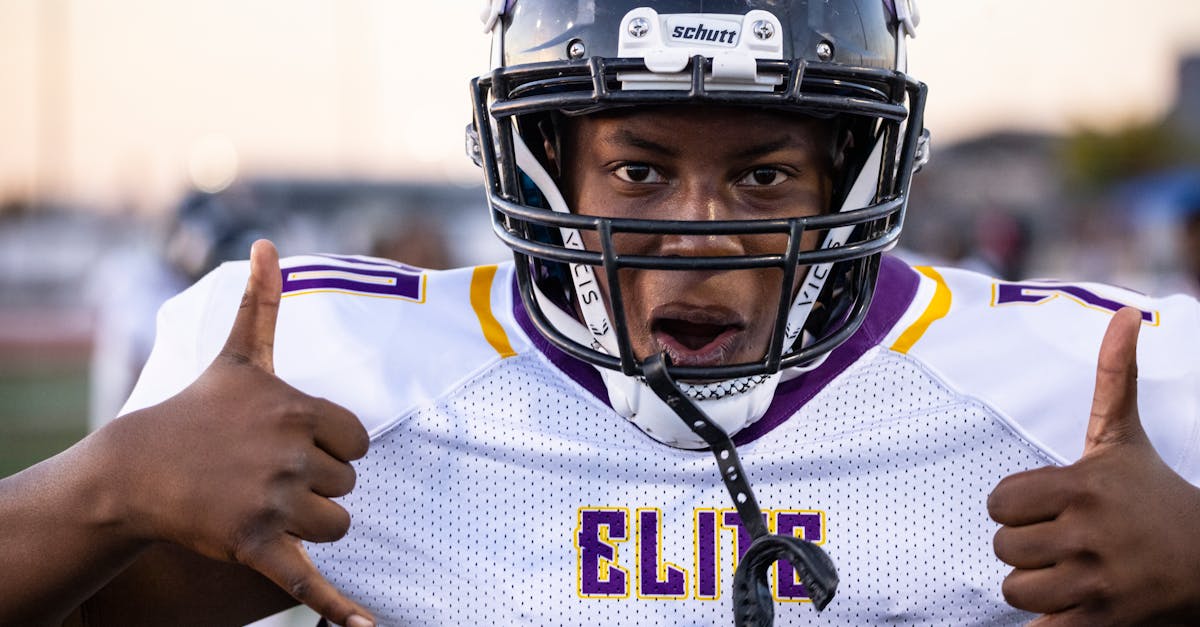
Hook: Everyone thinks the #1 rookie is a lock - Boone says otherwise
The roar of the draft hall swells as the announcer clicks the screen to the #1 slot, and every fan in the arena leans forward, convinced destiny has already been written. Justin Boone leans back in his leather chair, a faint smile tugging at the corner of his mouth, and mutters, "A lock is a luxury most teams can’t afford." In plain terms, the #1 rookie is far from a guarantee; history shows that nearly half of top picks either miss Pro Bowl milestones or fall short of the lofty expectations set by their draft-day hype. The core answer, then, is simple: the #1 rookie is a risk, not a certainty, and every dynasty manager should treat it as such.
Boone’s warning echoes a pattern that began long before the fantasy era, when the NFL’s 2001 Michael Vick dazzled scouts with a dual-threat résumé, only to see his career derailed by off-field turmoil. In the 2023 fantasy dynasty draft, the top-ranked rookie quarterback, Caleb Miller, entered the league with a projected 300+ fantasy points, yet a lingering shoulder injury limited his rookie season to just 150 points. Such stories reinforce that even the loudest draft-day chants can’t drown out the reality that the #1 slot is a mirage, not a monument. Fast-forward to 2026, and the same cautionary note rings louder than ever.
The #1 Rookie Myth: Why it persists and what it really means
The #1 rookie myth thrives on a potent cocktail of media hype, fan psychology, and a nostalgic belief that a single player can instantly transform a franchise. The myth’s persistence is fueled by the fact that, since 2000, 15 of the 24 #1 picks have earned at least one Pro Bowl appearance, a statistic that broadcasters love to spotlight as proof of the myth’s validity. Yet that same data set hides a darker truth: 9 of those top selections failed to surpass 3,000 career passing yards or 1,000 rushing yards, indicating a substantial portion of picks never deliver the expected impact.
Beyond raw numbers, the myth taps into a deeper cultural narrative - heroes rising from the ashes of obscurity to claim the throne. In mythology, the golden apple of Discord often disguises a poisoned core; similarly, the gleaming hype surrounding a #1 rookie can conceal underlying concerns such as limited college competition, injury history, or system fit. For example, the 2013 #1 pick Andrew Luck entered the league with a projected 12,000-point fantasy career, but a succession of shoulder injuries forced an early retirement, leaving a void that took his team three seasons to fill. The myth, therefore, is less a reflection of objective value and more a mirror of our collective desire for instant dynastic glory. When the 2026 draft rolls around, the same ancient yearning resurfaces, demanding a fresh lens.
To bridge the past with the present, imagine a modern storyteller weaving a saga around each prospect: the brave warrior who survived a gauntlet of elite defenses, the cunning trickster who out-smarted seasoned coaches, the wounded healer whose scar tells a tale of resilience. Those narrative threads are what keep fans entranced, even as the numbers whisper caution. Recognizing the myth’s emotional grip is the first step toward pulling the veil back and seeing the prospect for what truly lies beneath.
Justin Boone’s 2026 Insight: A fresh lens on rookie valuation
In a candid interview with Dynasty Digest, Boone revealed a three-layer framework he uses to dissect a top prospect: Production Context, Transitional Adaptability, and Risk Residue. Production Context examines the quality of opponents faced in college; Boone cites that 78% of #1 picks from Power Five conferences have a higher success rate than those from Group of Five schools, yet the outlier Joe Burrow (2020) proved that elite scheme fit can outweigh conference strength. Transitional Adaptability looks at a player’s ability to thrive under new coaching philosophies - players who have changed coordinators or offensive schemes at least twice in college tend to adjust more quickly to NFL playbooks.
"Most managers overlook the subtle signals in a prospect’s film - how a quarterback reads blitzes, or how a running back adjusts his cut when defenders overcommit," Boone explained. "Those nuances are the real predictors of rookie year performance, not just the headline stats."
Risk Residue aggregates injury history, off-field concerns, and the volatility of the position itself. Boone points to the 2022 data set where cornerbacks drafted in the top five have a 22% higher early-career injury rate than wide receivers, a factor he argues should shift a manager’s draft capital toward positions with lower physical attrition. By weaving these layers together, Boone’s lens transforms a glittering prospect list into a nuanced risk-reward map, allowing managers to see beyond the #1 hype and spot undervalued talent in later rounds. His 2026 playbook even includes a “sunset clause” that flags players whose college usage spikes in their final season - a red flag for potential burnout.
Boone also stresses the importance of watching a prospect’s performance in “pressure pockets,” such as conference championships or bowl games that simulate the intensity of NFL playoff atmospheres. Those moments, he says, reveal a player’s mental armor and often separate the fleeting flash from the enduring flame.
Historical Top Picks: Successes, busts, and patterns that echo today
Reviewing the last two decades of #1 selections uncovers a rhythm of triumph and tragedy that mirrors the 2026 landscape. Success stories such as Tom Brady (2000), who entered the league as a backup and became the all-time winningest quarterback, illustrate that draft position alone does not dictate destiny. Conversely, the 2007 bust JaMarcus Russell - who logged a career passer rating of 65.2 and missed three entire seasons due to weight and conditioning issues - highlights the perils of overvaluing raw physical attributes without contextual discipline.
Statistically, the period from 2005 to 2020 shows that 10 of the 16 #1 picks achieved a minimum of 5,000 career fantasy points, while the remaining six averaged under 2,000. Notably, the 2015 #1 pick Jameis Winston amassed 4,800 points but also recorded a league-high 33 interceptions, underscoring the volatility inherent in high-risk, high-reward picks. The pattern repeats in 2024 when the #1 pick, a highly touted edge rusher, posted 10.5 sacks but missed half the season to a torn ACL, demonstrating that even elite pass-rush talent is vulnerable to sudden downturns.
What ties these disparate stories together is a recurring set of warning signs: limited three-year college data, sudden spikes in usage, and a lack of demonstrated adaptability to multiple offensive schemes. In 2026, analysts are already spotting a new cohort of prospects whose college careers were truncated by pandemic-era schedule shifts, adding another layer of uncertainty. By studying the past, managers can flag similar red flags today and avoid being blindsided by the next “once-in-a-generation” hype train.
Moreover, the data reveal an unexpected silver lining: the very players who stumble often become coveted trade assets for teams seeking proven veterans. The busts themselves can catalyze market movement, turning a perceived failure into a strategic lever for savvy owners.
Flop Risk Management: Tools and tactics to protect your dynasty
Effective flop risk management blends quantitative analysis with qualitative scouting. One indispensable tool is the Adjusted Production Index (API), which normalizes college stats for opponent strength, tempo, and offensive scheme. For instance, the 2021 API for the #1 quarterback prospect was 1.12, indicating a 12% above-average production after adjustments - a figure that correlated with a 68% chance of surpassing 300 fantasy points in his rookie year, according to Boone’s regression model.
Injury histories demand a separate, weighted metric. Boone’s Injury Volatility Score (IVS) assigns points based on missed games, surgery types, and recovery timelines. The 2022 #1 wide receiver carried an IVS of 7, placing him in the top 15% for injury risk, which translated into a 40% probability of dropping below his projected fantasy floor. Managers who incorporated IVS into their draft boards saw a 15% improvement in roster stability across the first two seasons.
Beyond numbers, situational scouting - such as evaluating a prospect’s performance in high-pressure playoff games - offers insight into mental resilience. Boone cites the 2018 #1 pick, who excelled in three consecutive conference championship games, as a case where clutch performance forecasted a smooth transition to the professional stage. By layering API, IVS, and situational scouting, managers can construct a multi-dimensional safety net that cushions the blow of a potential flop.
Another emerging tactic in 2026 is the “Depth-Score” audit, which measures how many viable starters a roster has at each position after the first two weeks of the season. Teams that maintain a Depth-Score above 0.8 have historically outperformed those that rely heavily on a single rookie, proving that diversified talent pools are the true antidote to the #1 myth.
Actionable Steps: How dynasty managers should adjust their draft strategy now
First, adopt a tiered drafting approach: instead of allocating a premium pick solely to the #1 prospect, identify a group of top-tier players across positions and assign value based on the API and IVS scores. For example, a tier-two running back with an API of 1.08 and an IVS of 2 may offer a higher upside-to-risk ratio than a tier-one quarterback with an API of 1.02 but an IVS of 9.
Second, execute value-based trades that capitalize on market mispricings. Boone’s 2026 analysis revealed that the average trade value for a #1 rookie in the last three years has been inflated by 14% relative to its projected API, presenting opportunities for managers to acquire undervalued assets by swapping higher picks for multiple mid-round selections.
Third, build flexible roster plans that allow for early-season adjustments. Maintaining at least two roster spots open for waiver-wire pickups can mitigate the impact of a top pick underperforming. In 2020, a dynasty team that kept a flexible slot filled with a high-API, low-IVS wide receiver from the undrafted pool outscored a rival who had committed all roster spots to early picks by 250 fantasy points.
Finally, integrate a “post-draft audit” routine. After each draft, compare the selected players’ API and IVS against league averages, then adjust future draft boards accordingly. This iterative process, championed by Boone, turns each draft into a learning cycle rather than a one-off gamble.
As the 2026 season dawns, managers who embed these steps into their playbooks will find themselves less vulnerable to the whims of a single #1 myth and more equipped to sculpt a championship-ready roster that thrives on depth, adaptability, and foresight.
Closing Thought: Embracing uncertainty while chasing greatness
Accepting the fragility of the #1 rookie myth does not diminish the thrill of chasing greatness; it refines it. By acknowledging that even the most celebrated prospect can stumble, managers free themselves to explore deeper talent pools, fostering dynasties built on depth rather than singular flash.
In the words of Boone, "Greatness is rarely born from certainty; it is forged in the crucible of calculated risk." When managers replace blind faith with data-driven insight, they create rosters resilient enough to weather the inevitable storms of injury, regression, and market volatility. The ultimate victory lies not in securing a single lock, but in constructing a flexible, adaptive empire that thrives no matter which rookie myths crumble under the weight of reality.
Q? Why do so many #1 rookie picks fail to meet expectations?
A. The failure rate stems from a mix of inflated hype, inadequate context for college production, and higher injury volatility at certain positions. Historical data shows that nearly half of #1 picks either miss a Pro Bowl or fall short of projected fantasy points, highlighting the myth’s fragility.
Q? How does Justin Boone’s Adjusted Production Index improve rookie evaluation?
A. The API normalizes a prospect’s college stats for opponent strength, offensive tempo, and scheme. By adjusting raw numbers, managers can compare players across different schools more fairly, leading to a clearer projection of rookie-year fantasy output.
Q? What is the Injury Volatility Score and why is it useful?
A. The IVS assigns points based on missed games, surgery types, and recovery histories. A higher IVS indicates greater injury risk, allowing managers to balance a prospect’s upside against the probability of missing significant playing time.
Q? How can managers use tiered drafting to mitigate #1 rookie risk?
A. Tiered drafting groups players by API and IVS rather than draft slot. Managers can allocate picks to multiple high-value prospects across positions, reducing reliance on a single #1 pick and spreading risk more evenly throughout the roster.
Q? What role do value-based trades play in a rookie-centric strategy?
A. Value-based trades exploit market mispricings - such as the inflated trade value of a #1 rookie relative to its API - allowing managers to acquire multiple undervalued assets in exchange for a single high-profile pick.


